 £
£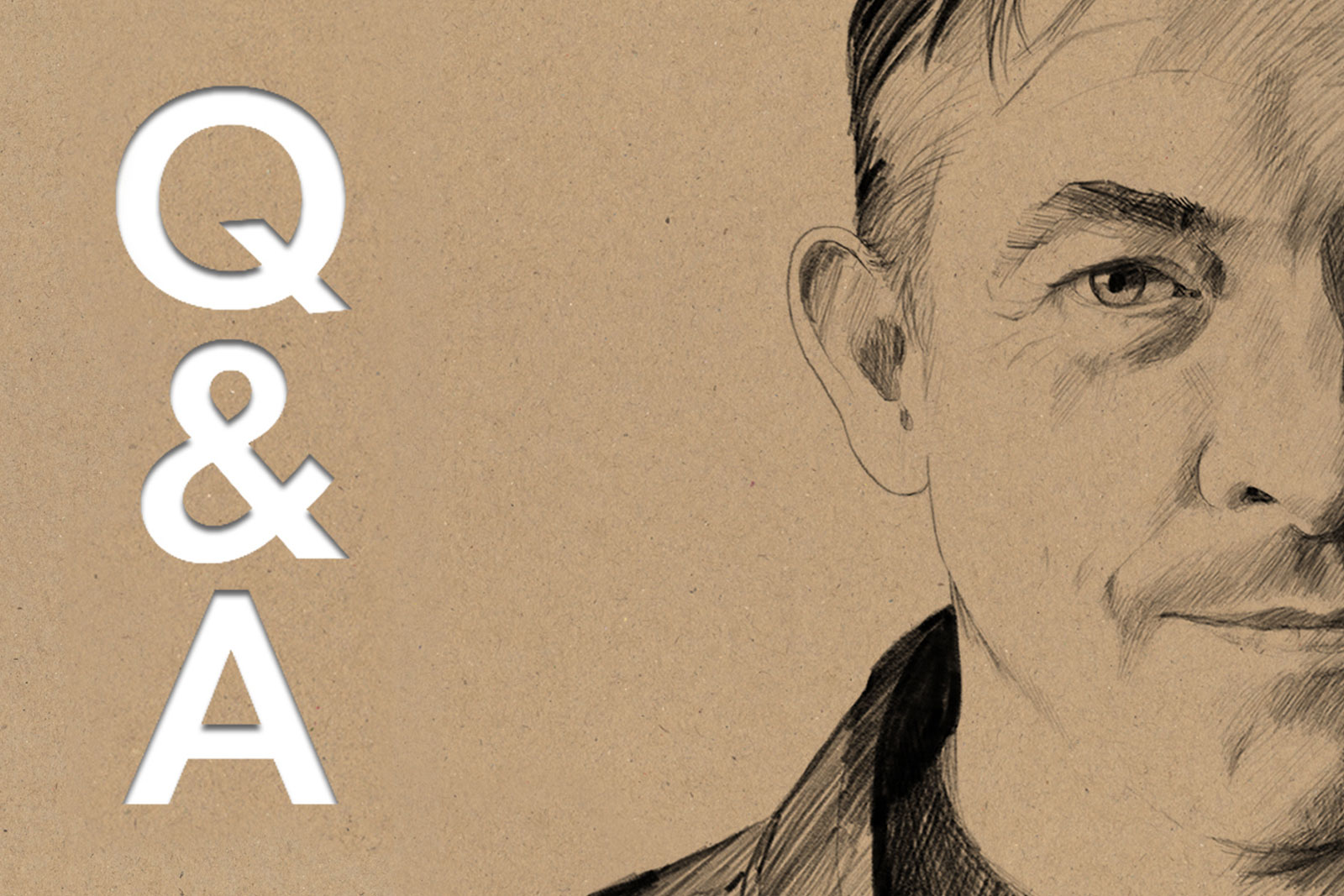
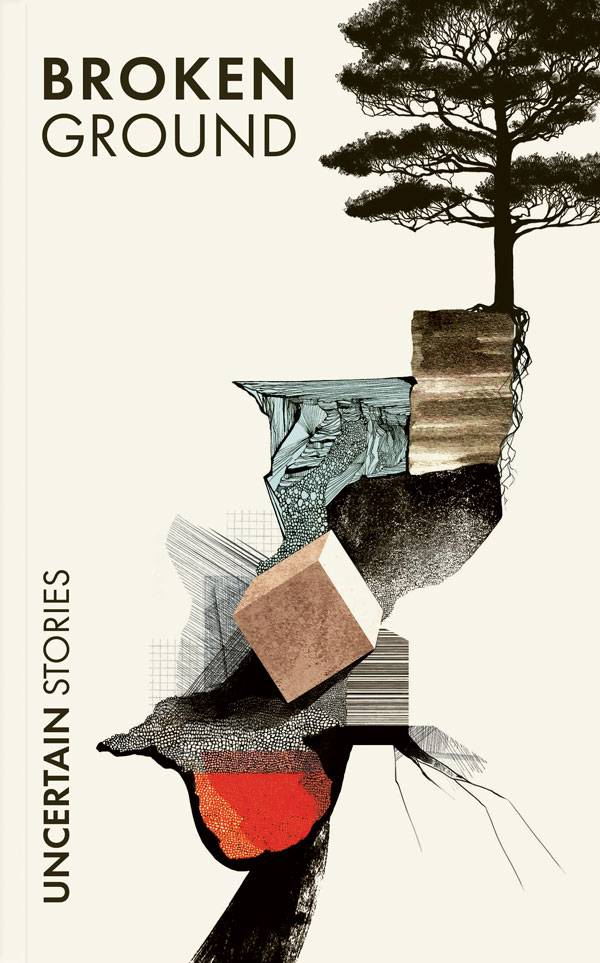
David Frankel's short story The Builder appears in our first anthology, Broken Ground. Here he is to answer some questions for us about his writing, his reading, and 'The Builder' itself.
Q&A with David Frankel
Can you tell us anything about the inspiration behind your story ‘The Builder’?
I usually struggle to remember where stories begin because it takes me a long time to write – or finish — a story. Each one tends to be a coagulation of different images and experiences that gestate over time (usually years). But most of my stories, including ‘The Builder’, begin with a place that caught my imagination. The idea behind the protagonist’s actions has been one that’s interested me for a while — but it would be a plot spoiler to discuss it!
As well as writing fiction, you’re also an artist and sculptor. Do you make a clear separation between your visual art and your writing, or do you find that you shift ideas and approaches back and forth between them?
I think, for me, they are separate activities. Keeping them separate means I’ve always got one to run to when the other gets too difficult. Having said that, there are definitely images and broad themes like landscape and micro-histories that fuel my work in both subjects.
What attracts you to writing short stories?
I love the intensity of short stories — their ability to hold a whole world in one moment that has fingers extending forward and backward. Kipling talked about being able to behold the past, present and future as one awful whole.
Omission — what is left out of the text — is a powerful tool for any writer, but in a short story it becomes more acute, piling meaning and emotion into the spaces between the words. This asks more of the reader, and I like that collaboration — both as a reader and a writer.
A really good short story ingrains itself in your imagination every bit as much as a novel — creating a new world from almost nothing. It looks small and harmless, lures you in, and then gives you a karate kick right in the chops.
I love the intensity of short stories — their ability to hold a whole world in one moment that has fingers extending forward and backward.
And how about the appeal of supernatural or speculative fiction? What draws you to using those ideas in your work?
A lot of my stories are more realist in tone, but I’m definitely drawn to stories that put the reader off balance. Life can be very strange, which we forget sometimes, when we’re swept along in the quotidian blur, and it’s good to explore the weird stuff that exists just below the surface of that world. A sense of the unexpected, or of the hidden elements of the world, can give a story a heightened atmosphere.
I like stories that unsettle me as a reader without me being able to quite put my finger on why I’m unsettled. It’s a difficult thing to pull off. Kipling’s ‘Mrs Bathurst’ is a great example. There is something in this kind of ‘supernatural light’ fiction which lends itself to exploring loss, separation, grief, melancholia, and the passing of time.
When and where do you most enjoy writing?
The time I most enjoy writing is on the very rare occasions I get to spend time in a little croft an a windswept and lonely bit of the Scottish coast, using a pen and paper instead of a keyboard. But, weirdly, I seem to be at my most productive when I’m writing on the train. Maybe I should try and get sponsorship from Southeastern Trains…
Moving on to your own reading, what’s your ideal time and place to read?
I’m a slow reader so I’ve learned to be an opportunist. I always have at least a couple of books on the go, and I tend to carry one with me wherever I go.
We’re using our Little Uncertainties project here at Uncertain Stories to distribute free short story booklets to readers (and potential readers!) around the country through cafes and bookshops. If you could give copies of one short story – classic or modern – to everybody in your own home town, which story would you choose, and why?
God, there are SO many short stories I’d love to get people to read. If had to pick one that packed a punch, it might be ‘Incarnations of Burned Children’ by David Foster Wallace, but half the town would probably need therapy after they’d read it; it’s pretty dark. Maybe something by Tim Winton, or ‘The Swimmer’ by John Cheever? Or one of Daniel Woodrell’s short stories..? I think my version of a Little Uncertainty would end up as anthology the size of a breeze block, so just as well I’m not in charge!
Do you have a favourite memory of reading a book or story? Maybe a moment that really left an impression on you?
Many. Shelves full of them. I suppose the ones that stand out are those I read as a child or a teenager. One of my first forays into the world of ‘grown-up’ fiction was a science-fiction anthology called ‘50 Short Science Fiction Tales’, edited by Isaac Asimov and Edward Groff-Conklin. I think even then it was probably quite old-school, but I was very young and it opened doors where I didn’t even know there were holes in the wall. I still have a copy.
Finally, do you have a favourite independent bookshop you think people should visit?
There are loads of indies around the country that I love. I’m lucky to have a very good local one — The Margate Bookshop — which is tiny but has a really well curated selection of books.