 £
£
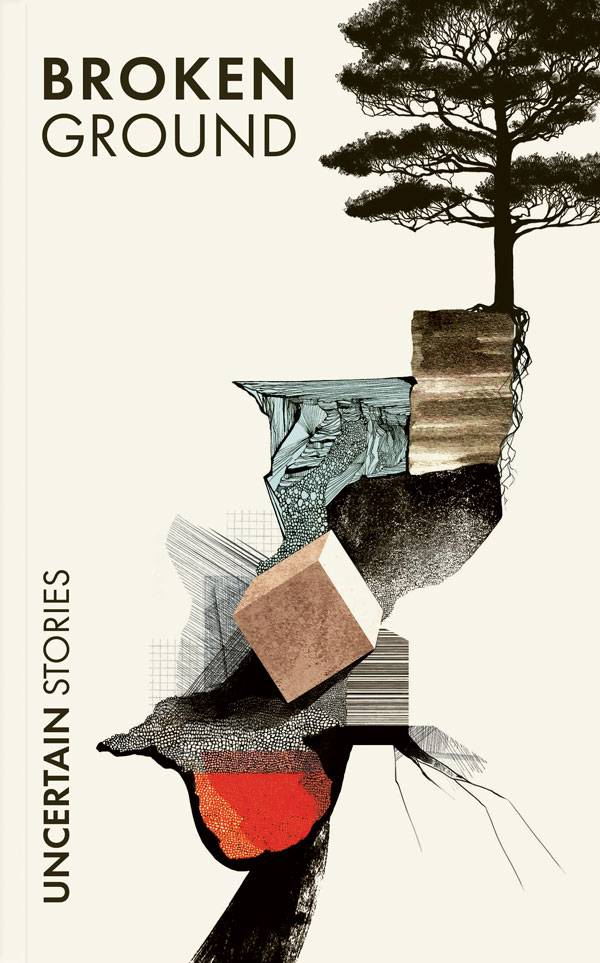
Here Mark Taylor - author of the story All Seasons Sweet from Broken Ground - takes part in our author Q&A, to tell us about the background to his story, along with his approach to writing and reading in general.
Q & A with Mark Taylor
Can you tell us anything about the inspiration behind your story All Seasons Sweet?
I often find the concrete idea of a story appears in my head seemingly from nowhere, and turning that into a story with any kind of heart is largely about working out what the inspiration was. That was a long process with this one.
So in this case, I was walking to the shops and unbidden I imagined myself going in search of the last ‘real’ peaches in a world of synthetic food. A few years and a few attempts later, I just about managed to unpick the feelings about nature and agriculture and labour that popped that thought into my head in the first place. I was helped by the Alpine Fellowship’s choice of ‘Wilderness and Civilisation’ as their theme in 2021: that framing helped to clarify why this story was interesting to me.
The title comes from the poem ‘Wild Peaches’, by Elinor Wylie, which examines the instinct against plenty and comfort, which is also at play in the story.
What attracts you to writing short stories in general?
I think it’s the flexibility of them: a short story can be a poem or an argument or a koan or a joke, anything you like, just as long as it’s still a story. Writing a story is also a very good way to work something out about yourself, and I find I have a lot of little things to work out.
And how about the appeal of supernatural or speculative fiction? What draws you to using those ideas in your work?
To me, it’s more a question of: why not? I think it’s natural for stories to be supernatural. Folk tales, religious texts, Chaucer and Shakespeare are full of it, and certainly when my six-year-old writes a story he’s always ready to add a magic portal. Sticking to the real world has its merits, like any form of constrained writing, but I can’t see why I would want to do it all the time.
I think it's natural for stories to be supernatural.
When and where do you most enjoy writing? (Do you have an ideal place, or time of day?)
I’m a whenever, wherever sort of writer at the moment. That’s by circumstance – I have to fit it in where I can – but I’ve found it works: it keeps the stories threaded through my life. Different times and places in life suit different times and places in a story, and vice versa. That said, I recently spent a weekend writing on the Northumbrian coast with two dear friends, and if I could do all my writing by the sea and in good company I would be a happy man.
Moving on to your own reading, what’s your ideal time and place to read?
Anywhere free of interruptions and responsibilities. A long train journey is good, but I think the ideal is a nice holiday cottage in the driving rain. (My wife and I once spent a day reading in a B&B with a beautiful view of Ben Lomond, obscured by the rainclouds that gave us an excuse not to climb it. Bliss.)
We’re using our Little Uncertainties project here at Uncertain Stories to distribute free short story booklets to readers (and potential readers!) across the country through cafes and bookshops. If you could give copies of one short story – classic or modern – to everybody in your own home town, which story would you choose, and why?
‘The Ones Who Walk Away From Omelas’ by Ursula K. Le Guin. The moral questions that story explores will never stop being relevant, but I think it also shows what short stories can do. It dares you to treat is as a thought experiment, but it is a story, with all the richness and uncertainty that involves. When you are finished thinking and talking and arguing about the thought experiment, you look back at the story, and you realise you haven’t added a single thing to it. You haven’t touched it, talking about it that way. That gives you a sense of what stories do for us that other ways of talking don’t. But as those who know the story will understand, for everybody in my home town to be given a copy of ‘The Ones Who Walk Away From Omelas’, it would be necessary for one poor innocent to suffer the stories I posted to fictionpress.com as a teenager.
Do you have a favourite memory of reading a book or story? Maybe a moment that really left an impression on you?
Perhaps reading Great Expectations the summer before I went to university. It was the thing on my reading list I was keenest to read. I remember being very moved by it, but also that my edition included both the published ending and Dickens’s original, and that having both, almost in superposition, made it more moving to me. That’s quite surprising, if you think of stories’ emotional power coming from us letting ourselves believe them. It clued me in to how much more complex and weird our relationship with stories can be, while still being ultimately about human feeling. I still can never remember which ending is which, and I don’t think it matters much.
It clued me in to how much more complex and weird our relationship with stories can be, while still being ultimately about human feeling.
Finally, do you have a favourite independent bookshop you think people should visit?
I hate to choose favourites! My local independent bookshop, Chorlton Bookshop, is small but perfectly formed. House of Books & Friends in Manchester is a delightful place, a bookshop with a mission to combat loneliness and social isolation. But the place most responsible for my overladen shelves is probably Cromford’s Scarthin Books. Their café is behind a moving bookshelf; what more can you ask for?