 £
£
Triptych
by Eva Carson
EXCERPT
I should say what it is my mother paints. What comes to mind when you hear the name Cathy Mullen, the way blazing fire and storm clouds suggest Turner, or yellow fields and starry skies appear for Van Gogh, is the vast dark mountainous landscape of the Scottish Highlands. Her colours are murky browns and slate greys and sullen greens. An almost postindustrial palette which, critics have noted, seems fitting for a working-class woman born in Glasgow in 1953. She came of age in that city in the seventies, when it was half razed and not yet rebuilt.
She favoured large canvases: at least twelve feet tall. The heavy shoulders of the mountains take up most of the vertical space, so that their size feels claustrophobic. My mother’s mountains are always towering walls. And always somewhere on the canvas, licked in by a few strokes of her paintbrush, is the white square of a cottage or house.
There’s a particular feeling in her work. It’s partly achieved, I think, by how she captures the rock, so that it seems both to shine with rainwater and hold shadows so dark they have an uncanny depth. And it’s to do with a perception of malice. I mean that her mountains are animate. Only a fool would mistake them for indifferent.
It’s easy to observe, and many do, that the tiny bright building she always places in her pieces is what makes them live. It’s remarkable how hospitable it seems, pushed together by three or four dashes of paint.
But — and more have recognised this after she produced her late paintings, particularly that final, terrifying triptych — there’s something else she’s doing too.
In each painting, scattered through the living rock, are a few Y-shaped black fissures, cracks that seem at odds with the planes of the mountains. They feel somehow closer to the surface of the work, and yet deeper in the layer of the paint. The eye glosses over them at first as texture, if it registers them at all. But if you stand a good distance away and look, they become suddenly clear. The feeling is something like if you have half registered a dark speck on your desk, then realise it’s an insect; then realise there are several more of them, crawling all over the surface.
The effect is not discernible in reproductions. Books and catalogues and prints won’t show it. Those who see her paintings and do notice it tend to like them a little less …
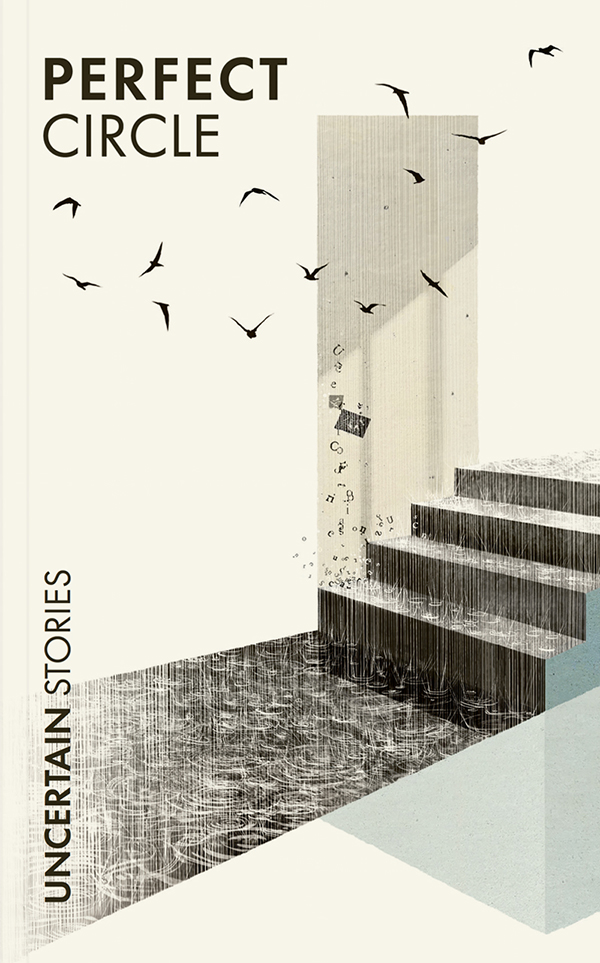
… Read the complete story in our anthology Perfect Circle.
Eva Carson

Eva Carson was born in Glasgow in 1984 and now lives in Fife. She’s inspired by the spooky and the strange, towns and cities, and stories of the coast. Her stories have been published by The Fiction Desk, Carmen et Error and 404 Ink Magazine.